Monitoring Relay

Monitoring relays for voltage, current, and phase supervision to keep electrical systems stable.

Monitoring Relay products

What Fault Are You Trying to Catch?

Tell us whether it is phase loss, voltage drift or a load fault. We reply within 24 hours with the model, setting range and wiring diagram.

Download Catalog
MONITORING RELAYS

Voltage and Current Monitoring Relays for Pump and Motor Panels

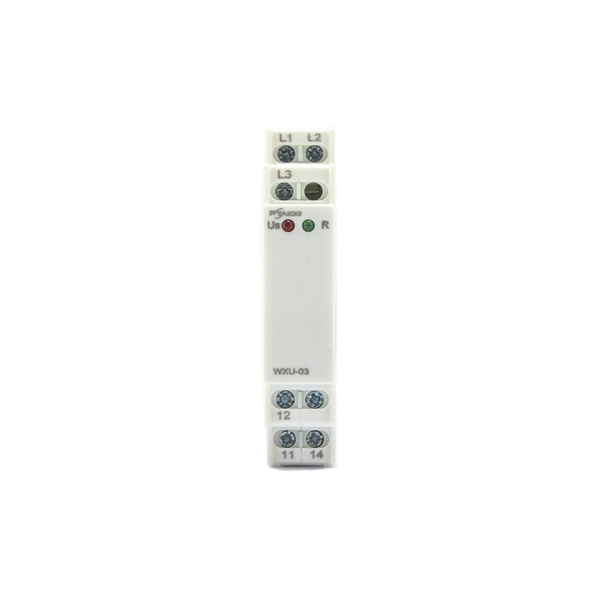
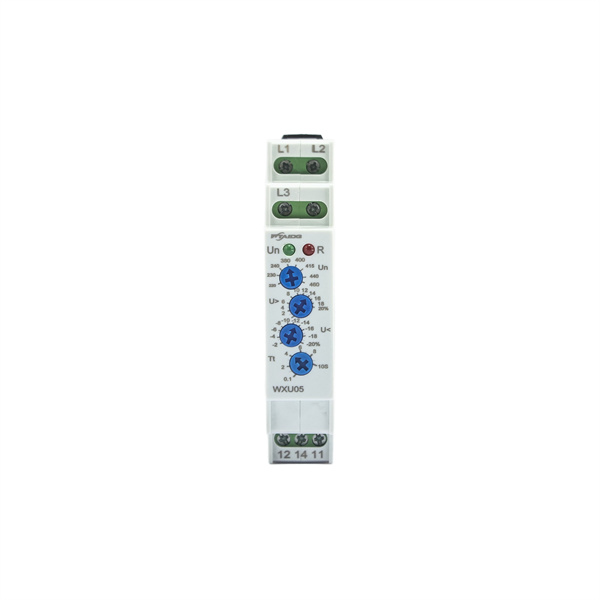
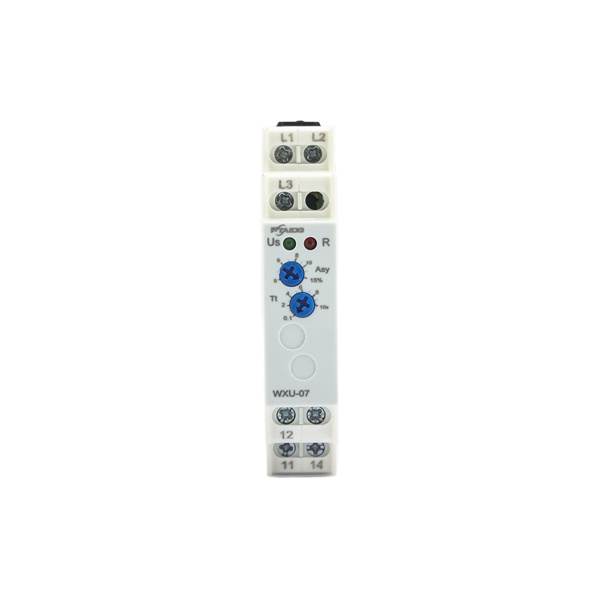
A monitoring relay is the part of a panel that notices the supply is wrong before the motor does. The WTXU range watches three-phase voltage for phase loss, phase sequence, over-voltage and under-voltage, with eight ranges set on a front knob and accuracy better than one percent.
Phase loss is the common case: a blown fuse or a loose terminal leaves one phase missing, and a three-phase motor keeps running on two until it overheats. The relay drops out and the contactor opens instead.
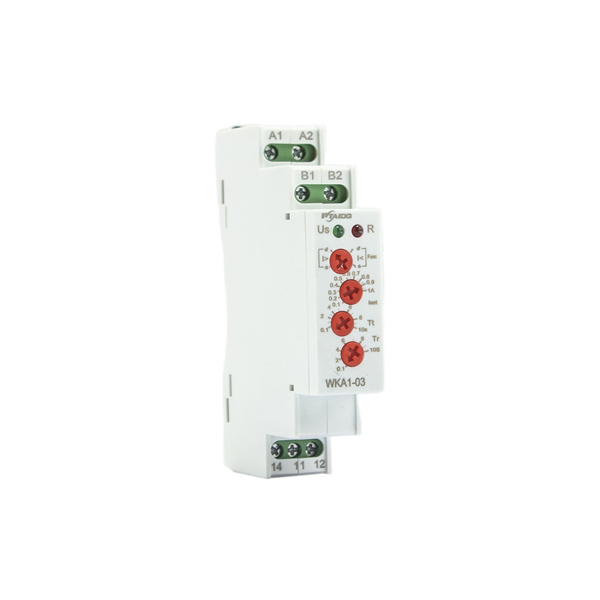
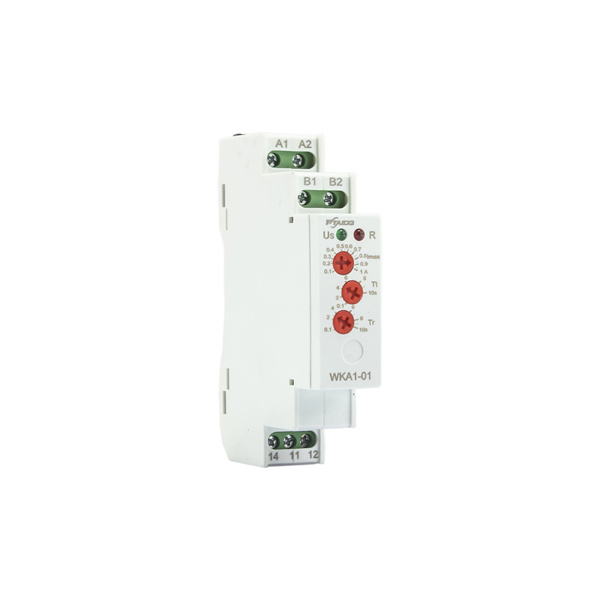
The WTKA1 range monitors current rather than voltage, for pumps that run dry, conveyors that jam and heaters that lose an element. Both families run on AC or DC 24 to 240 V and give an SPDT output. Units carry CE and CCC marking.
Voltage and Current Monitoring Relays for Pump and Motor Panels

Choosing the Right Relay

Decide what has to be detected first: a supply fault or a load fault. Then set the range on site with the front knob.
Model Detects Supply Output
WTXU-03 3-phase voltage, 8 ranges From the measured supply Relay contact
WTXU-05 3-phase voltage, 8 ranges From the measured supply Relay contact
WTXU-07 3-phase voltage, 8 ranges From the measured supply Relay contact
WTKA1-01 Current, under or over AC/DC 24–240 V SPDT
WTKA1-03 Current, under or over AC/DC 24–240 V SPDT

Setting notes

  • Don’t set the voltage window too tight. A relay set at plus or minus five percent will trip on normal supply variation every week, and someone will bypass it.
  • Add a delay for short dips. A 0.5 to 2 second delay rides through contactor chatter without missing a real fault.
  • Wire the output in series with the contactor coil, so a fault drops the contactor rather than only lighting a lamp.
Send the panel voltage, the load and the fault you need to catch, and we will confirm the model and setting range.
COMMON QUESTIONS

Frequently Asked Questions

Phase loss, phase reversal, under-voltage from a heavy start elsewhere on the supply, or over-voltage from a generator or a disconnected neutral. If it trips often, check the setting window first, then the supply.

CONTACT US

Start Your Electrical Project Today

Send your application, voltage, certifications and quantity to this electrical protection manufacturer. We reply with a quotation within 24 hours.
  • Engineering review by an electrical protection manufacturer before quoting
  • Plant pricing with no intermediaries
  • Export packing and shipping handled in one place
  • One order owner from quotation to delivery