DC Circuit breaker

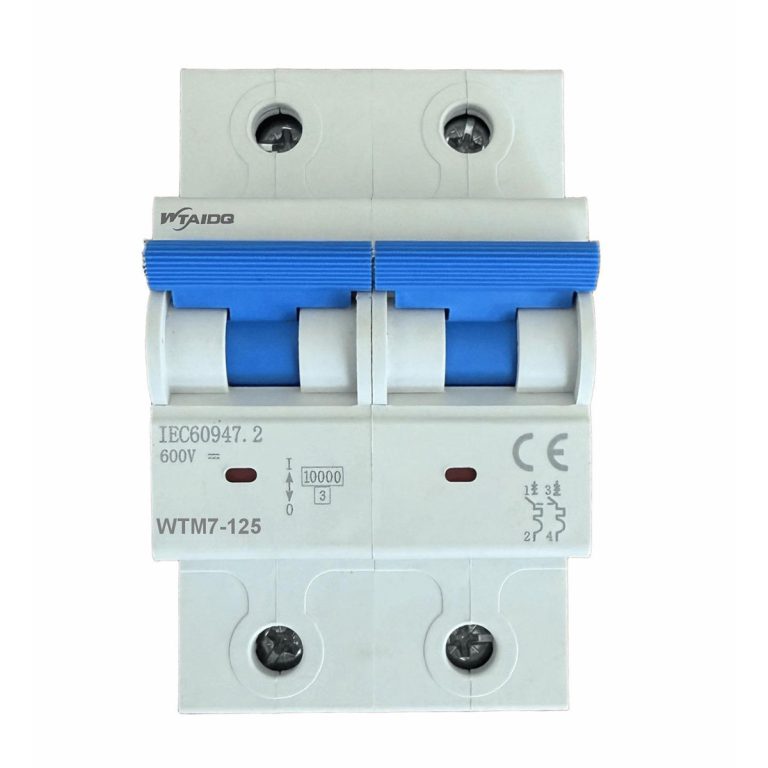
DC-rated breakers built for solar, battery, and DC power systems with stable interruption performance.

DC Circuit breaker products

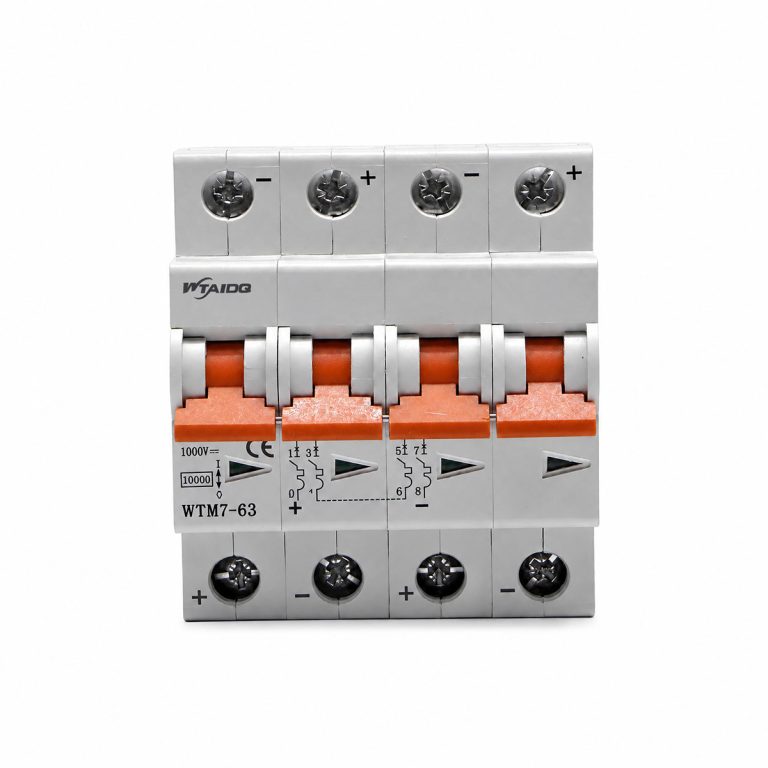
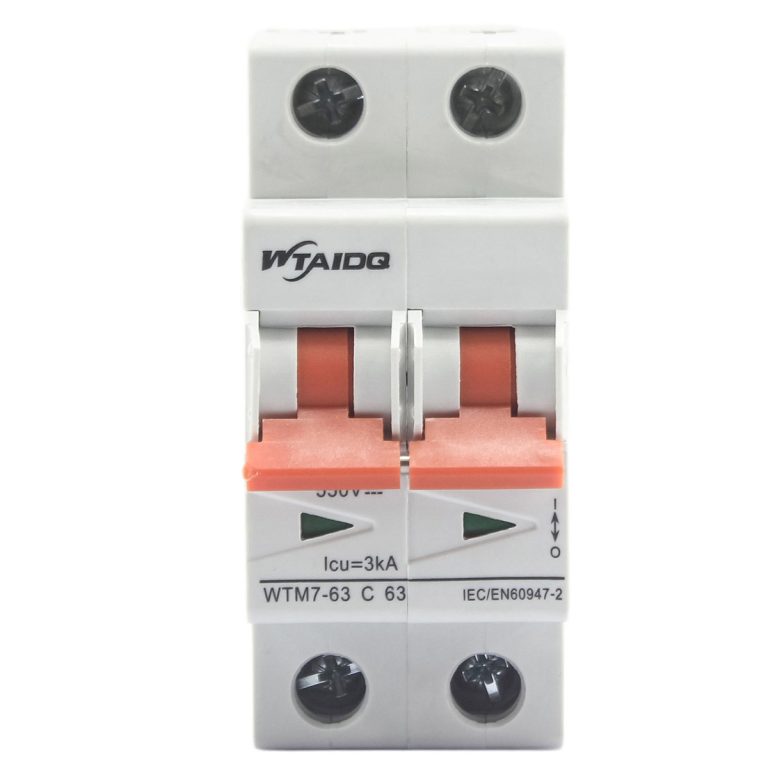
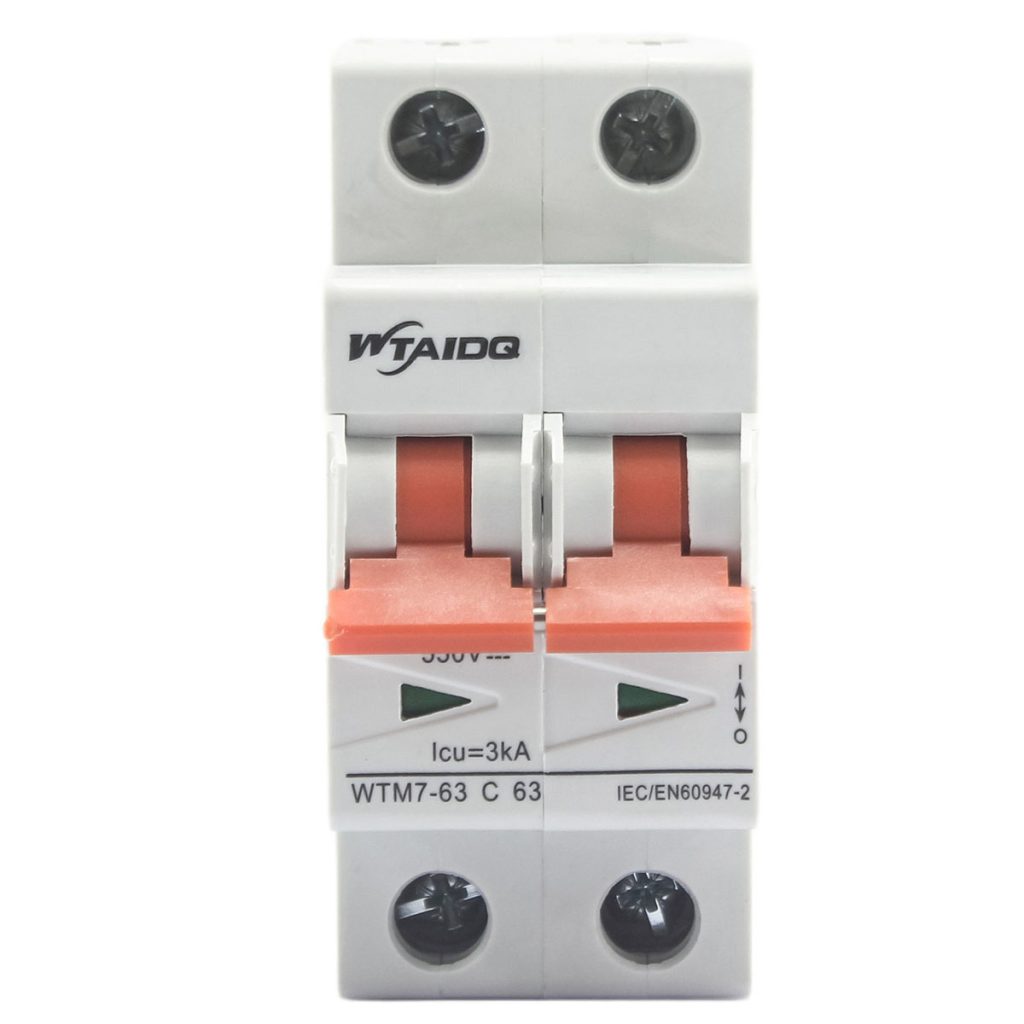
WTM7-63 DC Circuit Breaker

WTM7-63 DC Circuit Breaker

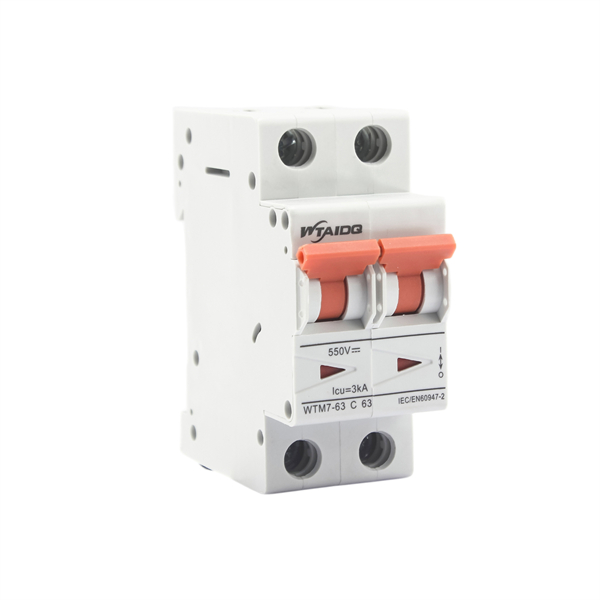
WTM7-63 DC Miniature Circuit Breaker (DC MCB) DC Voltage Coverage: Rated voltage from DC 250V in 1P configuration up to DC 1000V in 4P configuration, matching the pole count to the DC system voltage. Complete Ratings Range: Rated current from
Choose the Poles by Voltage

Send the maximum system voltage and the string current. We reply within 24 hours with the model, the pole count and the fuse coordination for the combiner.
DC CIRCUIT BREAKERS

DC Circuit Breakers for Solar Strings and Battery Circuits

A DC breaker does two jobs on a solar array: it protects the cable against a fault, and it gives a way to isolate the string for service. The arc is the hard part, because direct current never passes through zero, so the arc chamber is deeper and the contacts are further apart than in an AC breaker.
The WTM7-63 covers 3 A to 63 A. One pole is rated 250 V DC, two poles in series 500 V DC, three poles 750 V DC and four poles 1000 V DC, with 6 kA short-circuit capacity throughout.
On a 1000 V string, that means the four-pole version, not a single-pole device wired twice. Units carry CE and CCC marking.
DC Circuit Breakers for Solar Strings and Battery Circuits

Sizing a DC Breaker for a String

Two numbers decide the order: the string current and the maximum system voltage. The pole count follows the voltage, not the current.
System voltage Poles needed Current Typical use
48–250 V DC 1P 3–63 A Battery cabinets, telecom
500 V DC 2P 3–63 A Small strings
750 V DC 3P 3–63 A Residential inverters
1000 V DC 4P 3–63 A Commercial strings

Installation notes

  • Positive or negative? Fit the breaker in the positive conductor, and keep the same polarity on every string so the isolation point is consistent.
  • Size with margin. The breaker has to sit above the string current with allowance for heat in the combiner, and below the cable rating.
  • Breaker or fuse? A fuse is cheaper per string and needs no switching; a breaker adds the isolation point that service work needs. Many combiners use fuses per string plus one breaker as the isolator.
Send the system voltage, string current and whether you need isolation, and we will confirm the model and the pole count.
SOLAR STRINGS

Two Numbers Fix the Pole Count

Keep the Isolation Point on One Conductor

Fit the breaker in the positive side and keep it there across every string on the array.

Breaker or Fuse, Not Either-Or

Fuses protect each string; one breaker upstream gives the isolation point that service work needs.
COMMON QUESTIONS

Frequently Asked Questions

Install it in the positive conductor, and keep the polarity consistent across strings so every isolation point is on the same side. Some codes allow switching the negative, but mixing the two on one array makes service work dangerous.

CONTACT US

Start Your Electrical Project Today

Send your application, voltage, certifications and quantity to this electrical protection manufacturer. We reply with a quotation within 24 hours.
  • Engineering review by an electrical protection manufacturer before quoting
  • Plant pricing with no intermediaries
  • Export packing and shipping handled in one place
  • One order owner from quotation to delivery