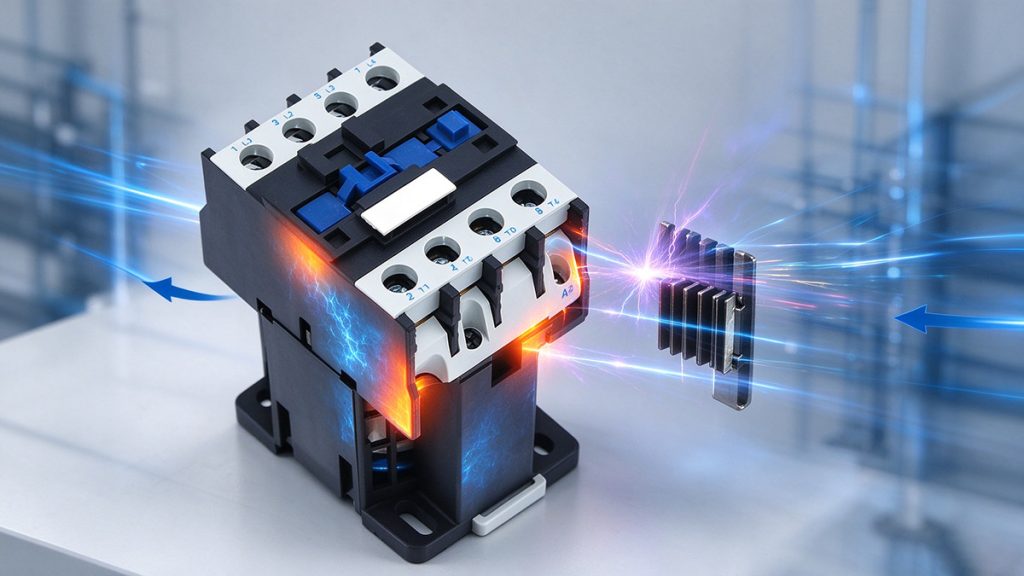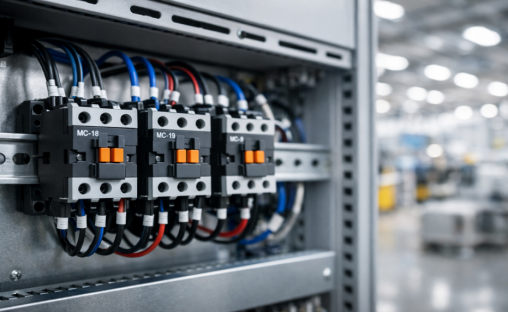
Why Contactor Not Pulling In (AC, HVAC, 3‑Phase, DC)
Contactors can fail to pull in across many types of equipment, but the general symptoms and root causes follow clear patterns. HVAC/AC contactors (usually 24V AC) behave differently from 3‑phase industrial contactors, and DC contactors have their own unique issues.
Most failures come from coil/voltage problems, mechanical binding, or wiring/control faults . Start with how to test a contactor before ordering parts.
Below is a comparison of failure scenarios by contactor type.
Contactor Type
Typical Application
Most Common “Not Pulling In” Scenarios
Main Causes
24V AC Contactor (residential HVAC/AC)
Home air conditioners, heat pumps, air handlers
No start when thermostat calls; works only when manually pushed ; humming but not closing
Low or missing 24V from transformer; bad coil; broken thermostat wires; loose terminals; dirty armature
120V / 220V Single‑Phase AC Contactor
Small commercial AC, single‑phase motors
No action at all; chatters then drops out
Wrong voltage supply; loose power wires; coil damage; weak internal spring
3‑Phase AC Contactor
Large HVAC, industrial motors, pumps
Will not pull in; makes noise but won’t seat; system shows phase loss
One phase missing; control voltage missing; tripped overload; coil failure; mechanical jam
DC Contactor
Solar, battery systems, vehicle HVAC
Fails to pull in at low voltage; sticks or does not engage cleanly
Low DC voltage; polarity reversed; coil damage; residual magnetism; worn contacts
Why is my AC contactor not pulling in but works when I press it in?
This is a classic sign of a faulty magnetic coil or low control voltage . The main power contacts and wiring are likely intact, as manual pressure closes the switch. However, the coil cannot generate enough magnetic force to pull the contacts in automatically.
The most common fixes are:
- Check the 24V transformer : Ensure it is supplying the correct voltage to the coil.
- Test the coil continuity : Use a multimeter to confirm the coil is not burned out.
- Replace the contactor : If the coil is bad or the control circuit is faulty, replacement is the only safe and permanent solution.
How to Test a Contactor That Won’t Pull In
You only need a few basic checks to diagnose the problem safely. Always turn off power before inspecting or testing.
- First, measure voltage at the coil while the system is calling to run. If voltage is below the rated value (such as below 20V for a 24V HVAC contactor), the issue is in the control circuit, not the contactor itself.
- Next, test the coil for continuity with a multimeter. No continuity means the coil is burned out, and the contactor must be replaced.
- You should also visually check the contacts and moving mechanism. Dirty, pitted, or stuck parts will prevent full pull‑in even if the coil is good.
What to Do When a Contactor Not Pulling In
If the contactor only works when you push it manually, the coil or control voltage is weak or dead. The high‑power side works fine, but the magnetic circuit failed. Do not keep manually pushing it —this is unsafe and can damage the compressor or motor.
When voltage is low or missing, fix the transformer, fuse, wiring, or thermostat before you replace the contactor. Many people replace the contactor unnecessarily when the real problem is a bad 24V transformer.
If the coil is damaged or the mechanical parts are worn, cleaning will not provide a permanent fix. In almost all cases, the safest and most reliable solution is to replace the entire contactor.
Once the fault is confirmed, the replacement has to match the coil voltage, the ampere rating and the auxiliary contact arrangement of the original device. Residential air conditioning and HVAC units normally use a definite purpose contactor, because it is built for compressor and condenser fan loads and carries the higher inrush rating those loads produce on start-up. General purpose panels and machine control use the CJX2 AC contactor series, which covers 9 A to 95 A in AC-3 duty with coil options from 24 V to 380 V. Where the failed device is a small single-phase load such as a fan or a pump, a CJX2-0910 9 A contactor with one normally open auxiliary contact is usually enough.
Common Mistakes about Contactor Not Pulling In
- A very typical problem is: the AC unit only cools when you press the contactor in by hand . This almost always means the 24V control circuit is weak, the coil is failing, or the transformer is not supplying full voltage. It rarely means the main power or compressor is faulty.
- For 3‑phase contactors, the most common issue is one phase being lost . This causes the contactor to hum, vibrate, or not pull in at all, and it can quickly damage motors if not fixed immediately.
- DC contactors mainly fail from low voltage or reversed polarity. They do not hum like AC contactors, so failure usually shows as complete non‑operation.
FAQs about Contactor Not Pulling In
What does “contactor not pulling in” mean?
It means the contactor’s magnetic coil cannot generate enough force to close its internal electrical switch. Without this closure, power cannot flow to the AC compressor, motor, or other equipment, so the unit will not start.
How can I tell if a contactor is failing or not pulling in properly?
Key warning signs include the unit not starting at all, the contactor humming/buzzing when the thermostat is activated, the AC only working when the contactor is manually pushed, random start failures, and visible damage (burn marks, melted plastic) on the contactor housing. A multimeter test for coil continuity and voltage will confirm failure definitively.
Why does my AC only work when I push the contactor switch manually?
This means the contactor’s high-voltage power side is working, but the low-voltage magnetic coil or the control circuit supplying it is faulty. The manual push physically closes the contacts, bypassing the non-functional coil—this is not a safe solution and signals an immediate need for contactor or control circuit repair.
How much does it cost to replace a contactor on an AC unit?
Replacement costs vary by whether you complete the work yourself or hire a professional. The contactor part alone for a standard 24V residential AC unit costs $20–$60; professional HVAC replacement (including parts, labor, and a system check) costs $150–$300. 3-phase contactor replacements for commercial systems cost more, with parts ranging from $50–$150 and labor from $200–$400.
How do I reset a contactor on an AC unit?
Contactors do not have a dedicated reset button—they are not designed to be reset, as pull-in failures are almost always due to a mechanical or electrical fault, not a temporary tripping issue. To reset the HVAC system, turn off the circuit breaker for 1–2 minutes and restore power; if the contactor still does not pull in, the unit has a persistent fault that requires troubleshooting and repair.
Can a failing contactor damage other HVAC components?
Yes. A contactor that hums, buzzes, or only partially closes causes electrical arcing and voltage fluctuations that can damage the AC compressor, control board, or transformer—these are some of the most expensive components in an HVAC system to replace. A failing contactor should be replaced immediately to avoid secondary damage.
Need a replacement contactor matched to your unit
Send the nameplate details of the failed device and our engineers will confirm the model, the coil voltage and the auxiliary contact arrangement before you order.
- Rated current and AC-3 duty class
- Coil voltage, 24 V, 110 V, 220 V or 380 V
- Auxiliary contacts required, NO, NC or both
- Pole count, 3-pole or 4-pole
- Panel brand, if it is a drop-in replacement
Wutai Electric | www.wtaiele.com | Email Contact form | WhatsApp +86 15727826392