Choosing between a definite purpose contactor and a general-purpose contactor starts with understanding the load, not simply comparing the labels. In HVAC and lighting systems, the right specification depends on starting current, switching duty, pole configuration, coil voltage, and the protection provided elsewhere in the circuit.
Key Takeaways
Targeted HVAC Application
Definite purpose contactors are commonly used in HVAC equipment, refrigeration systems, and other applications with defined electrical loads and operating conditions.
Broad Industrial Flexibility
General purpose contactors cover a broader range of switching tasks, with selection depending on the load type, electrical ratings, and control requirements.
Current Parameter Distinction
FLA, LRA, and RES ratings describe different aspects of a contactor’s capacity. They should be checked against the actual application rather than treated as interchangeable numbers.
Circuit Alignment
Pole configuration and coil voltage must match the circuit design, including the number of conductors being switched and the available control supply.
Lighting Inrush Duty
Lighting loads may require contactors with specific ratings for LED drivers, electronic ballasts, or high inrush current, even when their steady-state current appears modest.
Contactor vs. Starter
A contactor switches a load, while a motor starter typically combines switching with motor overload protection. The two serve related but different functions.
What a Definite Purpose Contactor Is
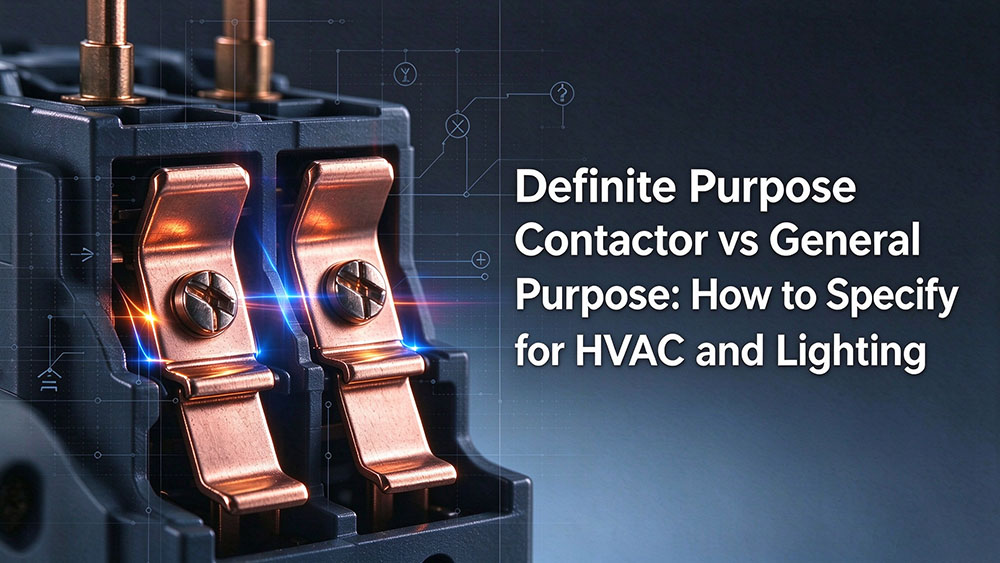
A definite purpose contactor is an electrically operated switching device designed for applications with relatively well-defined operating conditions. It uses an electromagnetic coil to open or close power contacts, allowing a control circuit to switch a compressor, fan motor, heater, or other electrical load.
The term definite purpose contactor meaning refers to this application-focused design. Rather than choosing a device mainly by a standardized motor size, engineers can select a model according to its current ratings, operating voltage, pole configuration, coil voltage, and expected switching duty.
HVAC equipment is a common example. An air conditioner may use a contactor to connect power to its compressor when the thermostat calls for cooling. When the cooling cycle ends, the control circuit de-energizes the coil, and the contacts open to disconnect the load.
North American Terminology and IEC Contactors
Definite purpose contactor is a familiar term in the North American electrical market, particularly for HVAC and refrigeration equipment. General purpose contactors, meanwhile, are used across a wider range of motor-control and industrial applications.
IEC contactors follow a different classification framework. They are commonly selected using utilization categories such as AC-1 for non-inductive or slightly inductive loads and AC-3 for starting squirrel-cage motors and switching them off while running, subject to the applicable equipment specifications.
Definite Purpose vs General Purpose Contactor
The difference between a definite purpose contactor and a general purpose contactor is mainly how each is rated and applied, rather than whether one is universally better.
Definite purpose models are often selected by full-load current and locked-rotor current, with ratings tailored to particular applications. General purpose contactors may use horsepower ratings, standardized motor ratings, or IEC utilization categories, depending on the product family.
| Selection Factor | Definite Purpose Contactor | General Purpose Contactor |
|---|---|---|
| Typical Applications | HVAC, refrigeration, specified equipment loads | Industrial motors, machinery, and broader control systems |
| Common Rating Approach | FLA, LRA, resistive current, and voltage | Motor horsepower, current, utilization category, and voltage |
| Product Configuration | Often compact, with application-specific options | Varies by product family and control requirements |
| Motor Starting | Must meet the specified LRA at the operating voltage | Must meet the applicable motor and utilization ratings |
| Best Selection Basis | Equipment requirements and manufacturer ratings | Motor duty, utilization category, and system design |
The table describes common patterns, not universal rules. A definite purpose contactor is not automatically suitable for every HVAC compressor, and a general purpose contactor is not automatically suitable for every industrial motor.
Definite Purpose Contactor vs IEC Contactor
An IEC-rated contactor may be a suitable alternative to a definite purpose model if its current, utilization category, electrical endurance, short-circuit coordination, and other ratings meet the application requirements. However, comparing devices by nominal amperage alone can produce a poor match.
For example, two contactors with similar running-current ratings may have different capabilities when switching a compressor at startup. Their permitted making current, motor rating, and performance at the actual supply voltage must be checked.
Reading FLA, LRA and RES Ratings
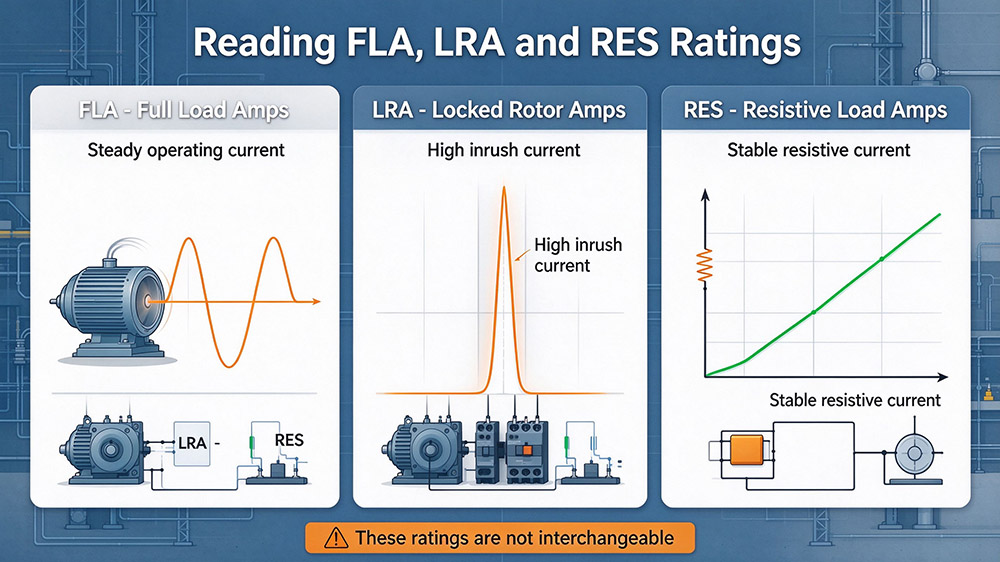
Three ratings frequently appear in definite purpose contactor specifications: FLA, LRA, and RES. Each describes a different aspect of the electrical load, so one cannot substitute for another.
FLA: Full Load Amps
The current rating associated with a motor operating under specified full-load conditions. The contactor’s applicable motor-current rating must meet the equipment requirements.
LRA: Locked Rotor Amps
The current associated with a motor’s locked-rotor condition. It represents a high-current starting or stalled condition and helps determine whether the contacts can withstand the required switching duty.
RES: Resistive Amps
The rated current for a resistive load, such as an appropriately rated heating element. This rating does not establish the contactor’s capacity to switch a motor or an electronic lighting load.
Pole Configurations
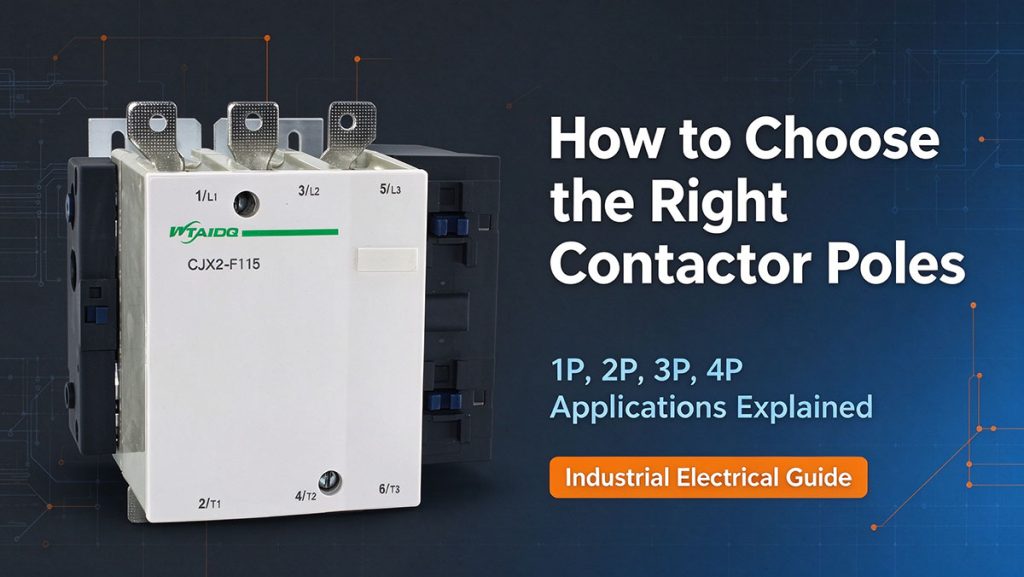
Pole configuration determines how many separate power paths the contactor can switch. Choosing the right arrangement depends on the supply system, the equipment wiring diagram, and whether particular conductors must be disconnected together.
1 Pole
Used in specific single-conductor switching arrangements. Some HVAC designs use a single-pole contactor with a permanently connected shunt or another fixed current path. The actual wiring and safety requirements must be verified.
2 Poles
A definite purpose contactor 2 pole configuration is common in single-phase HVAC equipment. It can switch two power conductors together when the selected model and circuit design support that arrangement.
3 Poles
A definite purpose contactor 3 pole model is commonly used for three-phase compressors and motors, allowing all three phases to be switched together.
4 Poles
Four-pole contactors can switch four separate conductors simultaneously when required by the system design. Applications may include certain lighting distribution arrangements or systems requiring coordinated switching of additional conductors.
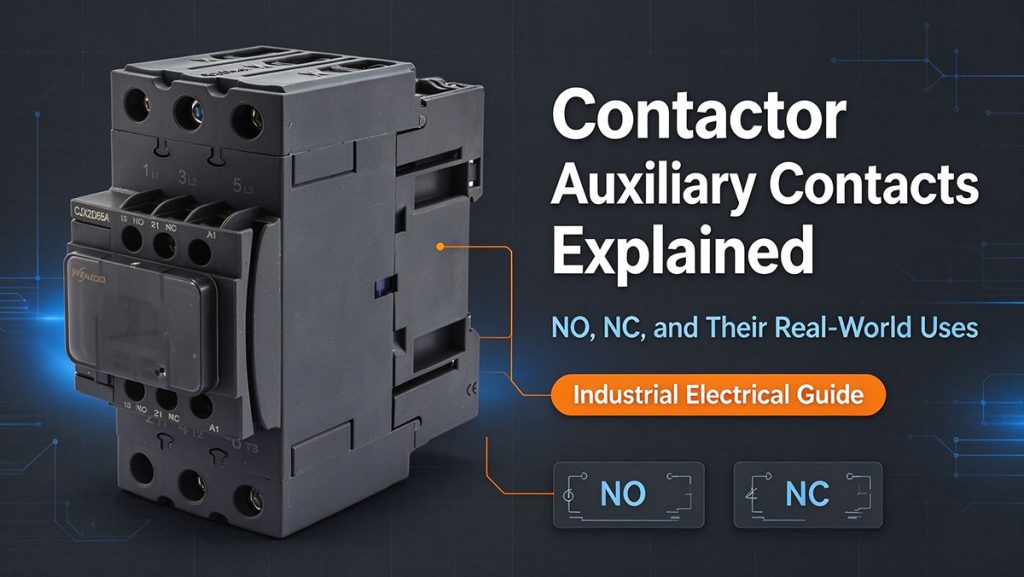
Pole count alone does not establish suitability. Check the number and type of contacts, rated current per pole, terminal arrangement, and whether the design permits the intended switching sequence. For three-phase motors, follow the manufacturer’s requirements for switching all necessary phases.
Definite Purpose Contactor Wiring Diagram
A typical wiring arrangement has two distinct sections. The power circuit carries the load current through the main contacts, while the control circuit energizes the coil. When the control supply reaches the coil terminals, the magnetic field closes the normally open main contacts. Removing the control signal allows the contacts to open again. The exact terminal markings, coil connections, auxiliary contacts, and protective devices vary by model.
Before wiring, use the manufacturer’s diagram rather than relying on a generic illustration. Confirm the supply voltage, coil voltage, terminal designations, grounding requirements, conductor ratings, and required overcurrent protection. Electrical installation should be carried out by a qualified person with the circuit isolated and verified safe.
Coil Voltage Options
The coil voltage is the voltage required to operate the contactor’s electromagnetic mechanism. It belongs to the control circuit, which may use a different voltage from the main power circuit. Common options include 24 V, 120 V, 240 V, and 208–240 V AC. Availability varies by product series, and some contactors also offer DC coils.
| Coil Voltage | Common Application | What to Check |
|---|---|---|
| 24 V AC | Thermostat and low-voltage HVAC control circuits | Transformer output and coil specifications |
| 120 V AC | Equipment with a suitable line-voltage control circuit | Available control supply and grounding arrangement |
| 240 V AC | Systems using a compatible 240 V control supply | Actual control-circuit voltage |
| 208–240 V AC | Equipment designed to accept the manufacturer’s stated voltage range | Permitted voltage range and frequency |
A 208–240 V coil should not be assumed to work with every voltage in that range unless the datasheet confirms it. Frequency, coil power consumption, and any minimum pickup voltage should also be considered.
When replacing a contactor, matching the pole count and current rating is not enough. An incorrect coil voltage can prevent reliable operation or damage the coil. Always confirm the exact control voltage before ordering a replacement.
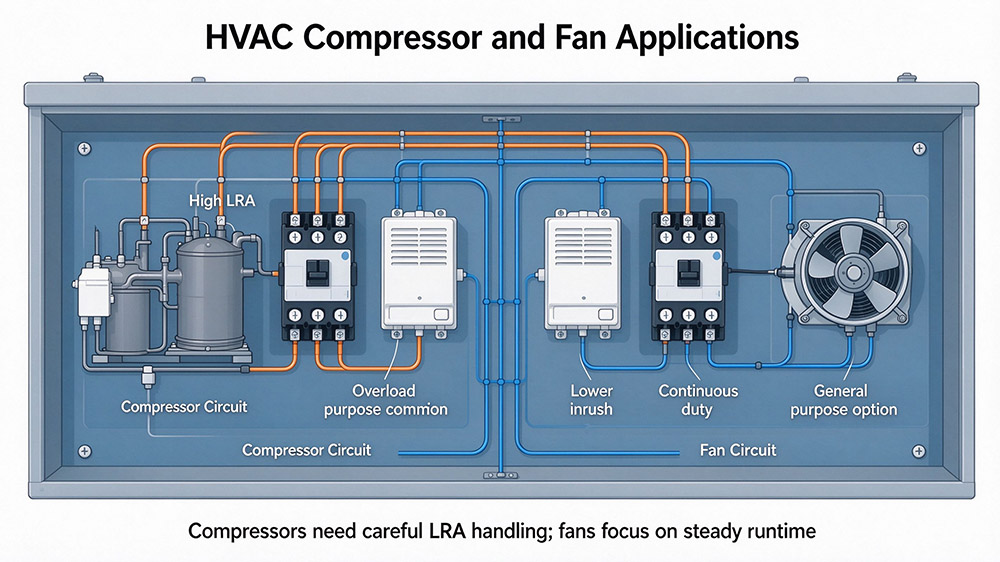
HVAC Compressor and Fan Applications
HVAC systems contain several types of electrical loads, and compressors and fans do not always place the same demands on a contactor.
Compressor Contactor Selection
Compressors can draw a substantial current when starting, particularly when connected directly across the supply. A contactor that handles the compressor’s running current may still be unsuitable if its LRA rating is insufficient. For compressor applications, check:
Definite purpose contactors are widely used in air conditioners, heat pumps, and refrigeration equipment because their ratings can be matched to these defined operating conditions.
Fan and Blower Motor Selection
Condenser fans, evaporator fans, and air-handling blowers also use contactors in some system designs. Their starting characteristics depend on motor type, rated power, starting method, and control arrangement.
A small fan motor may draw less running current than a compressor, but this does not mean any contactor with a higher nominal amperage will work. The motor rating, starting current, switching category, and expected number of operations still need to be checked.
Lighting and Resistive Loads
Lighting contactors and general-purpose contactors can look similar to HVAC contactors, but the electrical demands of lighting circuits can be quite different. A resistive heater generally draws a predictable current once operating. Lighting loads, especially LED drivers and some electronic ballasts, may draw a brief but high inrush current when energized. A large group of LED fixtures can therefore impose substantial stress on contacts even when the steady-state current is relatively low.
| Load Type | Main Selection Consideration |
|---|---|
| Resistive Heating | RES rating and continuous operating current |
| LED Lighting | Driver inrush current, switching endurance, and applicable lighting rating |
| Fluorescent Lighting | Ballast type, starting current, and load-specific ratings |
| Incandescent Lighting | High initial current and contact endurance |
| Mixed Lighting Circuits | Combined load current and the characteristics of each load type |
For a lighting circuit, verify the manufacturer’s permitted load type, maximum switching current, and any specific LED or ballast ratings. Where a lighting contactor is designed for frequent operation of large lighting banks, it may be a better fit than a general purpose model without the necessary lighting specifications.
Definite Purpose Contactor vs Motor Starter
A contactor and a motor starter are related devices, but they do different jobs. A contactor primarily switches electrical power in response to a control signal. A motor starter generally combines a contactor with overload protection and may include additional functions depending on its design.
| Feature | Definite Purpose Contactor | Motor Starter |
|---|---|---|
| Main Function | Switch an electrical load | Start and stop a motor with appropriate protection |
| Overload Protection | Usually provided separately when required | Commonly integrated or supplied as part of the starter assembly |
| Typical Applications | HVAC compressors, fans, and specified loads | Industrial motors, pumps, conveyors, and machinery |
| Selection Focus | Load ratings, poles, coil, and switching duty | Motor ratings, starting method, overload protection, and coordination |
The question of a definite purpose contactor vs motor starter comes down to what the circuit needs to accomplish. If the application only requires switching and the necessary protective devices are provided separately, a contactor may be suitable.
If the motor needs coordinated overload protection and a dedicated starting arrangement, a motor starter may be the more appropriate choice. A contactor by itself does not provide complete short-circuit or overload protection.
Selection Checklist
A practical selection process can reduce errors when specifying a contactor for HVAC or lighting equipment. Work through the following four steps, then verify the complete model specification:
1. Confirm FLA and LRA
Identify the actual load and obtain its rated running current and starting current. For compressors, check the equipment documentation for RLA, LRA, and the specified contactor requirements. Verify the contactor ratings at the intended voltage.
2. Choose the Pole Configuration
Decide whether the circuit requires one, two, three, or four switched poles. Match the configuration to the supply phases, conductor arrangement, equipment diagram, and applicable electrical requirements.
3. Match the Coil Voltage
Check the available control supply and the coil’s specified voltage and frequency. Do not assume that a contactor’s main-circuit voltage identifies its coil voltage.
4. Verify the Complete Application Rating
Review the load category, RES rating where relevant, electrical endurance, terminal requirements, environmental conditions, and protection coordination. Confirm that the selected model is suitable for the intended application.
For product sourcing, WTAIELE offers contactor options for different electrical applications. Its LCK3-25 and LCK3-30 definite purpose contactor models provide starting points for comparing product configurations, while its 4P series contactor line can be reviewed for applications requiring four-pole switching. Check individual product specifications to confirm exact ratings and coil options before selecting a model.
Conclusion
Choosing between a definite purpose contactor and a general purpose contactor becomes much easier when the selection starts with the load’s electrical characteristics. Check FLA and LRA, confirm the pole configuration and coil voltage, and verify the ratings for the actual motor, lighting, or resistive application. These checks help avoid mismatched replacements and support dependable operation over time.
Looking for contactors for HVAC, lighting, or other electrical control applications? WTAIELE offers practical contactor solutions for different system requirements, helping you find a suitable fit for your next project. Explore our comprehensive WTAIELE contactor product portfolio to find reliable models configured for your exact engineering parameters.
Frequently Asked Questions
What is the main difference between a definite purpose contactor and a general purpose contactor?
A definite purpose contactor is typically rated for defined applications such as HVAC and refrigeration, often using FLA and LRA ratings. A general purpose contactor serves a broader range of switching tasks and may use motor horsepower ratings or IEC utilization categories. The correct choice depends on the actual load and the manufacturer’s specifications.
Can I replace a definite purpose contactor with an IEC contactor?
Potentially, yes. The replacement must meet the application’s running-current, starting-current, voltage, utilization-category, switching-duty, and protection requirements. Similar amperage ratings alone do not establish compatibility. Confirm the replacement against the equipment manufacturer’s documentation and applicable electrical standards.
How do I choose between a definite purpose contactor 2 pole and 3 pole model?
A two-pole model is commonly used in suitable single-phase circuits, while a three-pole model is often used for three-phase motors. The actual choice depends on the supply arrangement, the conductors that must be switched, and the equipment wiring diagram. Never choose pole count solely by the physical size of the original device.
Is a definite purpose contactor suitable for LED lighting?
It can be, provided the contactor is specifically rated for the lighting load and its inrush characteristics. LED drivers may produce high initial currents, so the resistive current rating alone is not enough to confirm suitability. Check the manufacturer’s lighting-load specifications and permitted switching duty.
Does a definite purpose contactor provide motor overload protection?
Not by itself in the usual configuration. A contactor opens and closes the power circuit, while overload protection is generally provided by a separate protective device or an appropriate motor-control assembly. The complete circuit must have protection selected and coordinated for the motor and installation.